Sainsbury's sells Argos for £120m. Every chain sold this cheaply since 2018 shrank.
Sainsbury's agreed on 31 July to sell Argos to Swift Partners for at least £120m. Ten years ago it paid £1.4bn for the chain's parent company.
What happened
Sainsbury’s has agreed to sell Argos to a company set up by three retail veterans for at least £120m, ten years after paying £1.4bn for its parent Home Retail Group.
Sainsbury’s gets £70m when the sale completes, expected in . The other £50m is paid over the following three years. The buyer is Swift Partners.
In 2016 Sainsbury’s paid £1.4bn for Home Retail Group, the company that owned Argos. It will now write down about £350m, a loss on paper that costs no cash.
Swift takes the whole business. That includes 201 standalone Argos stores, 466 Argos counters inside Sainsbury’s supermarkets, more than 450 collection points and the Daventry distribution centre. It also gets the buying offices in Shanghai and Hong Kong, and the Argos Care and Argos Pet Insurance businesses.
Long-term agreements keep Argos counters, collection points, Nectar and Habitat running inside Sainsbury’s.
The buyers have run big retailers before. Richard Pennycook becomes executive chair. He led the Co-operative Group through its 2014-17 rescue and was finance chief at Morrisons. With him are Trevor Strain, former finance and operations chief at Morrisons, and Matt Truman of the retail investor True Capital, which backs the company.
Argos is sold while it is still trading, by an owner that can pay its debts. Only the usual approval from regulators is needed. Sainsbury’s plans to separate Argos fully from its computer systems by 2029. The price is about 9p for every pound paid in 2016.
Sources: The Guardian, RNS, J Sainsbury plc
The Pattern
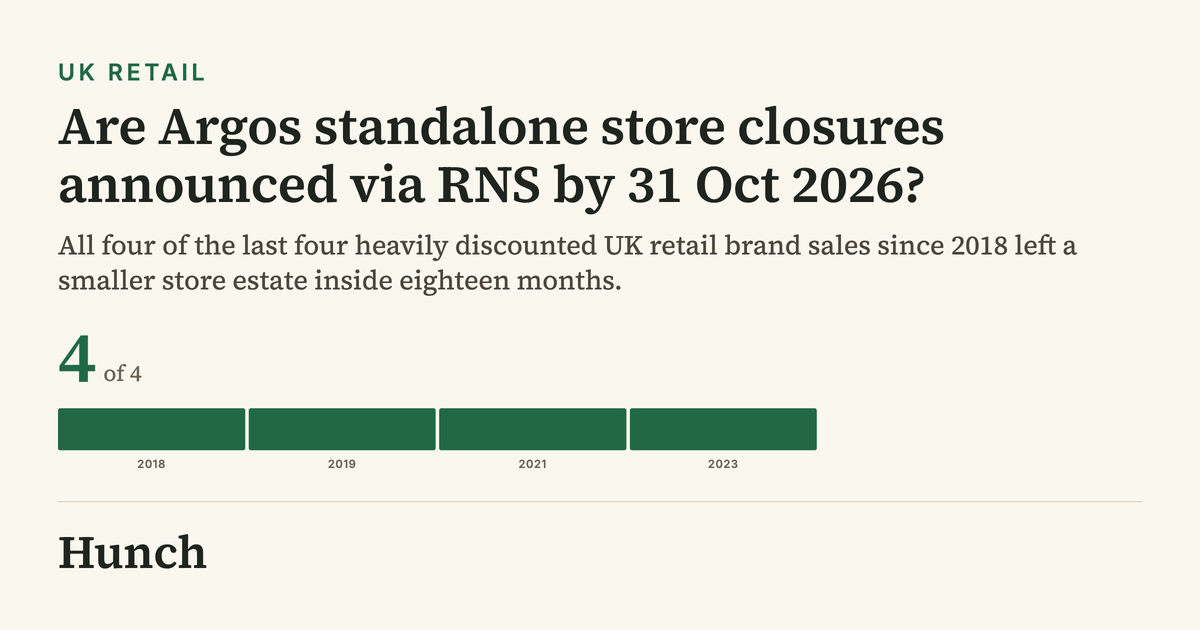
We looked for large UK shop chains sold since 2018 for a small part of what they were once worth. We found four, and each had fewer stores within 18 months. How much each shrank depended on the kind of sale. Chains sold out of administration, after the business had failed, kept only the brand. Chains sold while still trading kept going with fewer shops.
Show the other 2 cases
The Read
History points to fewer Argos stores, but probably not before the end of October. Every chain in the record shrank within 18 months. Until the deal completes, expected in , the stores still belong to Sainsbury’s, and closing them before then would cut across a deal priced on a working business. The earlier cases ran in the same order. Homebase closed 42 stores months after its £1 sale, and HMV’s cuts came under its new owner. The record shows which way things go and says little about how fast.
The weak spot is the money. Only £70m arrives when the deal completes. The other £50m comes over three years and depends on Argos still trading, and that is where cheap retail sales have often gone wrong. Homebase and HMV were both sold again within six years. That suggests the bigger questions about Argos come later, when it separates from Sainsbury’s systems in 2029 and its 667 stores and counters can be counted again.
Disclaimer
Hunch works only from sources that are publicly available, and publishes on the basis of analysis of that material. We do not form an editorial opinion or take sides, we give a simpler and wider view of news that already exists. If information in a source we used was inaccurate, distorted, or later disputed but had already entered our analysis, Hunch accepts no liability for that. Predictions are not advice. Phase 1 markets use Hunch Points, not money.
Published by Hunch under the Editorial Code. Complaints and corrections: /contact/.