AstraZeneca is in $400bn merger talks. Will there be a deal by the end of August?
AstraZeneca has been in talks for months with Bristol Myers Squibb on a $400bn merger, the FT reported on 2 August. Its shares fell as much as 7%.
What happened
AstraZeneca is in early-stage talks with Bristol Myers Squibb over a merger valuing the combined group at about $400bn; the shares fell sharply and the drugmaker slipped to third place among UK-listed companies.
AstraZeneca and Bristol Myers Squibb have discussed a merger for several months, the Financial Times reported on Sunday evening. Together the two drugmakers would be worth about $400 billion. The FT’s sources warned that the talks may lead nowhere. AstraZeneca would not comment.
Before the weekend AstraZeneca was worth about £196bn ($264bn) and Bristol Myers about $133bn. Any deal would probably be paid partly in cash and partly in shares.
On Monday AstraZeneca shares fell as much as 7% in London, while Bristol Myers rose about 6% in US trading before the market opened. The fall made AstraZeneca only the third most valuable company listed in the UK.
A combined company would be the world’s fourth-largest drugmaker by market value and the largest by sales. Both have big businesses in cancer drugs, so competition regulators in Washington and elsewhere would look closely at a deal. Investors told Reuters they saw little need for such a large deal at all.
AstraZeneca has been through this before. In 2014 its chief executive, Pascal Soriot, fought off a takeover bid from Pfizer that had become public. He still runs the company today.
Sources: The Guardian, Reuters
The Pattern
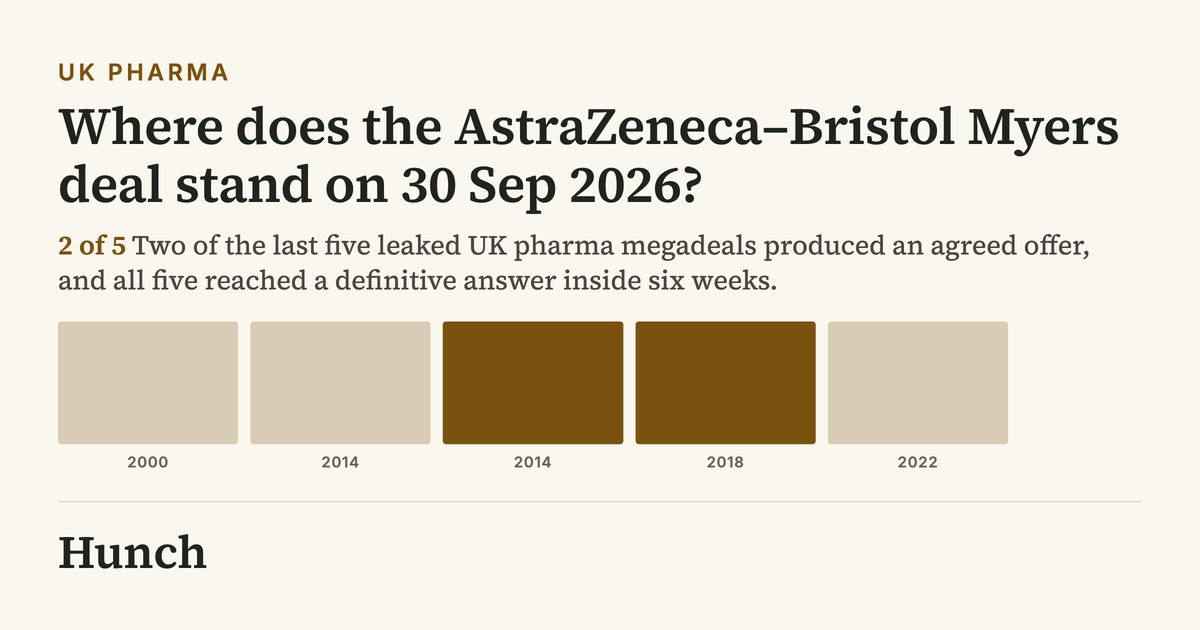
We looked for merger talks involving a UK-listed drugmaker that became public before any deal was signed. Since 1998 this has happened five times. All five ended within six weeks, either with a firm offer or with the talks dead. Two produced an agreed or firm offer, and three collapsed.
Show the other 3 cases
The Read
History points to a quick answer, and more often a no. All five earlier cases ended within six weeks, and three of them collapsed. The start here looks difficult. The shares fell 7% and investors doubt the deal makes sense. Both companies also sell cancer drugs, which gives competition regulators an easy objection. The closest case is 2014, with the same company and the same chief executive, and it ended after four weeks with the bidder walking away.
The weak spot is the deadline. In every earlier case the UK company was the one being bought, so UK takeover rules forced the bidder to make a firm offer or walk away by a set date. This time AstraZeneca would be the buyer of a US company. No 28-day deadline applies and neither side has to say anything. Talks that have already run for months could simply go on without an announcement.
An agreed deal announced within the month would break the pattern outright. So would a ruling by the Takeover Panel, which enforces the UK takeover rules, that brings these talks under those rules.
Disclaimer
Hunch works only from sources that are publicly available, and publishes on the basis of analysis of that material. We do not form an editorial opinion or take sides, we give a simpler and wider view of news that already exists. If information in a source we used was inaccurate, distorted, or later disputed but had already entered our analysis, Hunch accepts no liability for that. Predictions are not advice. Phase 1 markets use Hunch Points, not money.
Published by Hunch under the Editorial Code. Complaints and corrections: /contact/.