Economists urge the Bank of England to slow bond sales. Such calls often worked.
The Bank of England is selling back the government bonds it bought after 2008. Economists want it to slow down. It decides on Thursday 17 September.
What happened
On economists including former Bank of England deputy governor Charlie Bean urged Chancellor John Healey to press the Bank to slow or halt its sale of government bonds before its decision on Thursday , as the Telegraph reported that officials had drawn up plans with the Treasury and the Debt Management Office to stop selling 20- and 30-year bonds.
The Bank of England decides on Thursday how fast to sell its government bonds. It bought them after the 2008 crash and during the pandemic and is now selling them back, a process called quantitative tightening.
Besides Charlie Bean, the economists who wrote to John Healey included former OECD chief economist John Llewellyn and fund manager Christopher Mahon. Reuters said it could not confirm the Telegraph’s report of a plan to stop selling 20- and 30-year bonds, and that the final decision rests with the Bank.
The sales are expensive for the government. In August the Bank estimated they could cost the Treasury £120bn over the life of the programme, if interest rates follow the path markets expect.
Government borrowing costs are high. On Monday the yield on the 10-year bond, the interest rate the government pays to borrow for ten years, passed 5.4%, its highest since . The 30-year yield reached 5.93%, its highest since .
The Bank’s holdings have fallen from a peak of £875bn to under £490bn. A year ago it cut its yearly sales target from £100bn to £70bn, and long-dated bonds fell to a fifth of sales.
Its plan for July to had no long-dated sales at all. Most forecasters expect a further cut to £50bn this week.
The decision comes with the noon interest rate announcement on Thursday, six weeks before Healey’s first Budget on . On Budget day he also writes the Bank’s remit, the letter that sets out its job.
Governor Andrew Bailey told MPs earlier this year that limiting the cost to government is not the job of the Monetary Policy Committee, which sets interest rates. In June he said the Bank would not stop selling bonds.
Louise Haigh, now in the Cabinet Office, has promised to stop him pursuing policies that damage the government’s finances. Healey has so far turned down calls from other ministers for a hard line. He prefers promises that the Bank will keep the Treasury’s losses in mind.
Sources: Guardian, Telegraph, Reuters (2), Bank of England (2)
The Pattern
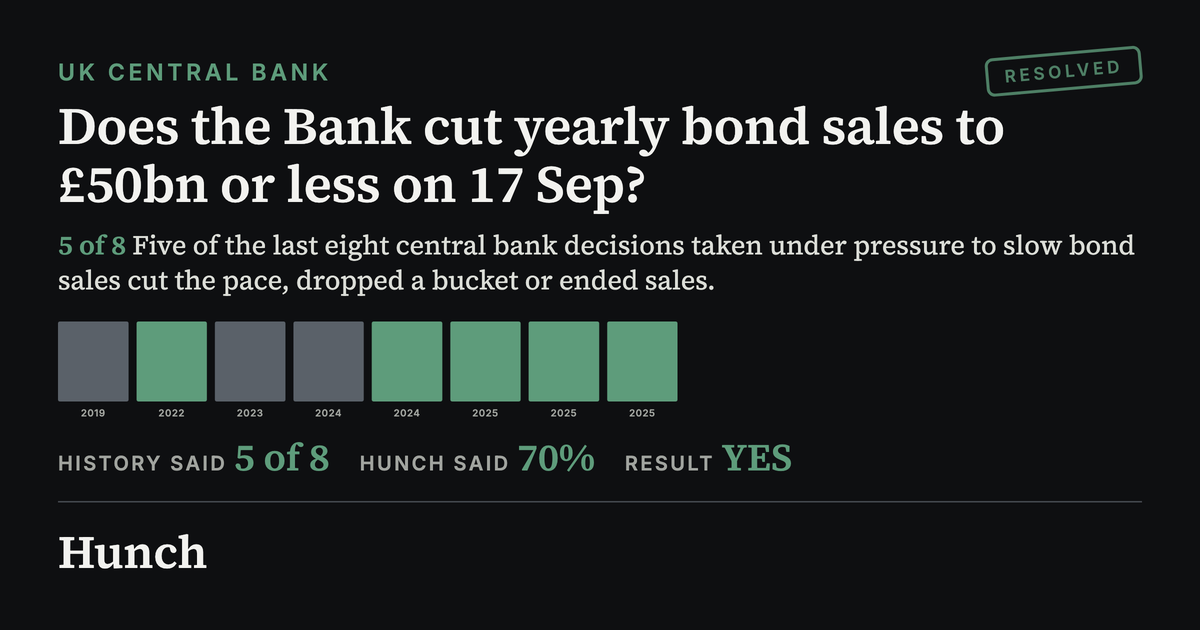
We looked at planned decisions on the pace of bond sales since 2019 by the Bank of England, the US Federal Reserve and the Bank of Canada. We took only decisions made while markets, governments or economists were publicly asking for a slowdown in the weeks before. For each, we checked whether the bank cut the pace, stopped selling some bonds or ended sales at that decision. We also checked whether the 10-year bond yield was lower 90 days later.
Show the other 6 cases
The Read
Both sides need something. Andrew Bailey told the Treasury committee that the cost to government is not the committee’s job. But the Bank’s own £120bn loss estimate and a 10-year yield at its highest since 2007, six weeks before a Labour chancellor’s first Budget, pull the Bank into the Budget story. The Telegraph’s report of a plan agreed with the Treasury and the Debt Management Office looks like the Bank choosing its own ground before Thursday. John Healey wants a cheaper Budget without being accused of leaning on the Bank. His tool is the remit letter he writes on , and he has already turned down calls for a hard line. Louise Haigh has promised a public fight with Bailey.
History points to a cut to £50bn, with fewer long-dated bonds sold. Five of the eight banks in the record cut at the planned decision, and the Bank itself cut a year ago, four days after the same kind of call. The Guardian and Reuters report £50bn as the expected figure, and the Bank has already planned a quarter with no long-dated sales. The yield question is less clear. Yields were lower 90 days later in six of the eight cases, but the two misses, the UK in 2024 and the Fed in 2025, came when yields were driven by forces outside the bank’s own sales. This month oil is above $100, the US 10-year yield is at 5%, and the Budget itself brings new government borrowing.
The case against starts with the Bank’s own record. It has never fully stopped selling, and Bailey said in June it would not. A cut only to £55bn or £60bn, or fewer long-dated sales that do not stop, would answer the first two questions no, and Reuters could not confirm the Telegraph’s plan. The Bank’s August report says the whole programme could end anywhere between a £70bn cost and a £65bn gain once cheaper past borrowing is counted, which is the argument for standing firm. The yield question fails if oil and US yields keep rising into October, or if the Budget raises this year’s bond sales.
Sources: Guardian, Telegraph, GOV.UK, Reuters (2), Bank of England (2), The Times
Disclaimer
Hunch works only from sources that are publicly available, and publishes on the basis of analysis of that material. We do not form an editorial opinion or take sides, we give a simpler and wider view of news that already exists. If information in a source we used was inaccurate, distorted, or later disputed but had already entered our analysis, Hunch accepts no liability for that. Predictions are not advice. Phase 1 markets use Hunch Points, not money.
Published by Hunch under the Editorial Code. Complaints and corrections: /contact/.