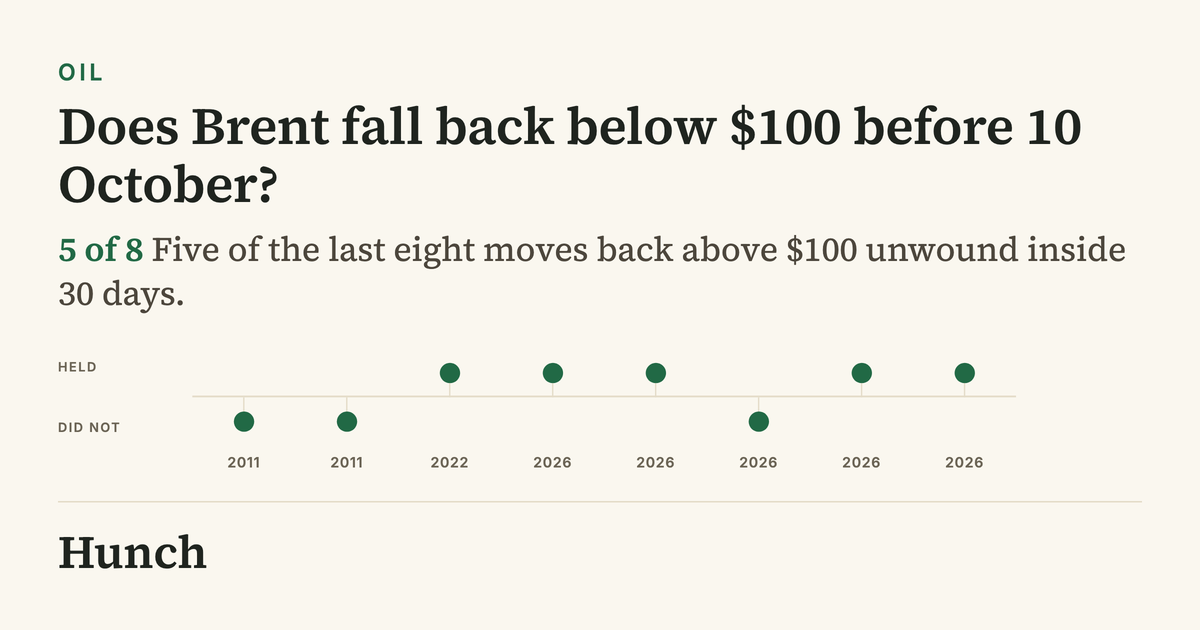
Oil is back above $100 a barrel. Most past rises like this faded within a month.
Brent oil rose above $101 on 9 September after US strikes on Iranian tankers and Houthi attacks on Saudi oil sites. It hit $102.17 the next day.
What happened
Brent crude rose by more than 3% on Wednesday to top $101 a barrel, the first time above $100 since July, after the US said it had destroyed several Iranian tankers and Iran-backed Houthis attacked four cities in Saudi Arabia.
Brent crude touched $102.17 on Thursday morning. Brent is the main world price for oil. On Wednesday afternoon the BBC put it at $100.70, up 2.83% on the day and the highest since late July. The question now is whether it stays above $100 until .
Petrol in Britain cost 166.2p a litre on Tuesday, the highest in four years, the AA said. That is 4.4p more than at the August bank holiday. Diesel cost 187.7p.
The British wholesale gas price passed 200p a therm, a unit of gas, on Thursday. That is the highest since . Ofgem’s cap on household energy bills rises by 4% in October. Bank of England governor Andrew Bailey told MPs on Tuesday that the oil price raised the risk of higher inflation and interest rates.
Brent is up more than 60% this year. The Guardian counts three separate spells above $100 in 2026. Counting each time the price crossed the line, it has moved back above $100 five times since Iran blocked the Strait of Hormuz in late February.
Sources: The Guardian (2), BBC
The Pattern
Brent has risen back above $100 a barrel eight times since 2011, counting only rises reported by the publications we use. Five of them came this year, during the war with Iran. For each one we checked whether the price fell below $100 again within 30 days.
Show the other 6 cases
The Read
History points to a fall back below $100. Five of the eight earlier rises were reversed within 30 days, four of them during this year’s war. The falls came fast: the same afternoon in April, three days in May, eleven days in July. Each time the trigger was news from the talks. Donald Trump has called off strikes, extended ceasefires or announced talks four times since February, and each time the price dropped $10 to $20 in a day. At $102 the price sits only a little above the line.
The rise that lasted this year, on , lasted because the blockade stopped real shipments and had no end date. Supply looks worse now than it did then. The Houthis are attacking Saudi oil sites, and Iran’s Revolutionary Guards have declared a zone beyond Hormuz closed to shipping. EU gas stores are 67% full, against a five-year average of 84%, and Chinese crude buying has recovered towards 9m barrels a day. If Saudi oil is actually lost, and not only threatened, $100 becomes a floor.
A ceasefire or new talks would decide it quickly, as they did four times this year. Real damage to Saudi exports would keep the price up. The petrol question works differently. Shops that sell fuel can keep their margins for weeks, so 170p may arrive after .
Disclaimer
Hunch works only from sources that are publicly available, and publishes on the basis of analysis of that material. We do not form an editorial opinion or take sides, we give a simpler and wider view of news that already exists. If information in a source we used was inaccurate, distorted, or later disputed but had already entered our analysis, Hunch accepts no liability for that. Predictions are not advice. Phase 1 markets use Hunch Points, not money.
Published by Hunch under the Editorial Code. Complaints and corrections: /contact/.