UK vets must publish their prices from December. Did such rules cut bills before?
New rules for UK vets became law on 23 September. Vets must show their prices, and a written prescription can cost no more than £21.
What happened
On the Competition and Markets Authority published the Veterinary Services Market Investigation Order 2026, which became law the next day.
The rules became law on . The Competition and Markets Authority (CMA), the UK competition regulator, published its order for vets on , six months after its final report. Vet businesses must publish a price list for standard care such as consultations and vaccinations, say whether they belong to a large group, give a written estimate before any treatment expected to cost £500 or more, and tell owners they can buy medicine elsewhere. A written prescription can cost no more than £21 for the first medicine and £12.50 for each extra one. Large groups must publish their first price lists by ; smaller practices get more time.
The order limits only the prescription fee. The CMA said many practices charged £30 or more for it, and that over 70% of owners buy long-term medicine from their vet when many could save £200 a year or more online. What vets charge for consultations, operations and medicines is not limited. Official figures show vet prices were 4.8% higher in than a year before, while prices in general rose 3.1%. Vet prices have risen faster than prices in general every month since .
Not everyone expects bills to fall. An independent vet told the BBC that without income from medicines, prices for consultations and surgery are “very, very likely to have to go up”. The British Veterinary Association said most practices already work this way. The Progressive Veterinary Association, a group of vets, has threatened legal action, saying the rules let large groups hide who owns a practice. Anyone who wants the Competition Appeal Tribunal to review the order has two months from its publication to apply.
Sources: CMA (2), ONS (2), BBC, The Guardian, CAT Rules 2015, rule 25
The Pattern
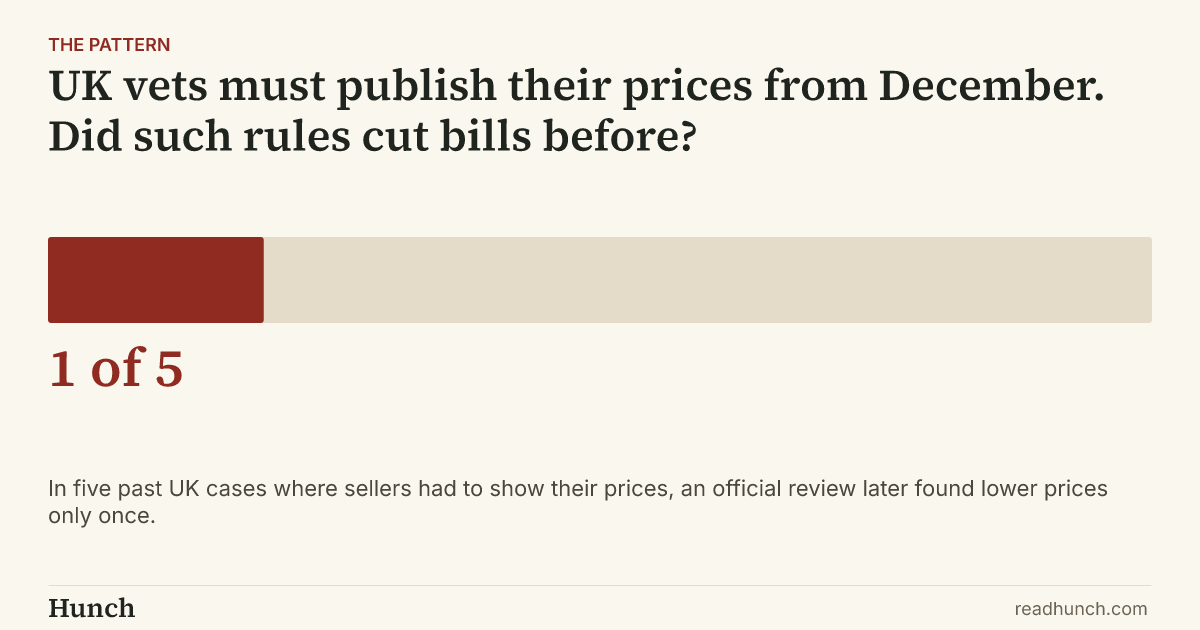
We looked for cases where a UK competition regulator, after a long investigation, ordered sellers to show their prices and give buyers more information, but did not limit the main price. We found five since 2005, one of them for vets. In each case we asked two things. Did a later official review report that prices came down? Did anyone take the order to court?
Show the other 3 cases
The Read
The record points one way. In four of the five cases, no official review found that prices came down after sellers had to show them. The one exception, funerals, came in the years of the pandemic, when the CMA said simpler funerals were part of the reason. The closest case is the 2005 order for vets: medicine prices were expected to fall, and in 2025 the CMA said prices at vets may be rising and 38% of owners still did not know they could ask for a prescription.
The case for a different result now is that vet price growth has been slowing for two years and the new rules go further than in 2005, with price lists, written estimates and a comparison service. The case against is that the rules do not limit what vets charge for care, and some vets expect those fees to rise. On court action, the record is clear, and the only group threatening it wants stricter rules. The record is small, and the same regulator decided every case.
Disclaimer
Hunch works only from sources that are publicly available, and publishes on the basis of analysis of that material. We do not form an editorial opinion or take sides, we give a simpler and wider view of news that already exists. If information in a source we used was inaccurate, distorted, or later disputed but had already entered our analysis, Hunch accepts no liability for that. Predictions are not advice. Phase 1 markets use Hunch Points, not money.
Published by Hunch under the Editorial Code. Complaints and corrections: /contact/.