UK energy bill cap rises 4% in October. Most Budgets after a rise left bills alone.
Ofgem set the October energy cap at £1,723, a 4% rise and the highest in 3 years. The Chancellor's first Budget comes 4 weeks later on 28 October.
What happened
Ofgem sets the energy price cap at £1,723 for to , a rise of 4% or £60 a year for a typical dual-fuel household paying by direct debit.
Gas bills rise 8 per cent from . Ofgem, the energy regulator, said higher wholesale gas prices linked to the conflict in the Middle East were behind the rise. Electricity bills stay about the same, because the government has taken VAT off home electricity. Without that, the cap would have been around £45 higher.
For a typical home paying by direct debit the rise is £5 a month. Around 35 per cent of households, roughly 11 million, are on fixed deals and will not see it.
The VAT cut was one of the Prime Minister’s first acts. Announced on , it takes VAT off home electricity bills from , in time for the new cap. It is paid for this financial year with money from the cancelled Digital ID programme.
The announcement said any further help, including longer-term steps, would come at the Budget, together with a forecast from the Office for Budget Responsibility (OBR). On the day of the cap news the Energy Secretary, Miatta Fahnbulleh, said the government would keep looking at what more it could do to protect families. The Prime Minister pointed to the VAT cut as his answer so far.
The Budget is on . It is the first Budget of the Chancellor, John Healey, who has said it will be built on fiscal discipline and will meet the fiscal rules. It comes four weeks after the October cap starts and about four weeks before Ofgem announces the January cap.
Cornwall Insight expects the January cap to rise again. So the Budget is the one planned chance for the Chancellor to act before the coldest months. That is why the question is whether help comes in this Budget.
Sources: Ofgem, GOV.UK, Guardian, BBC
The Pattern
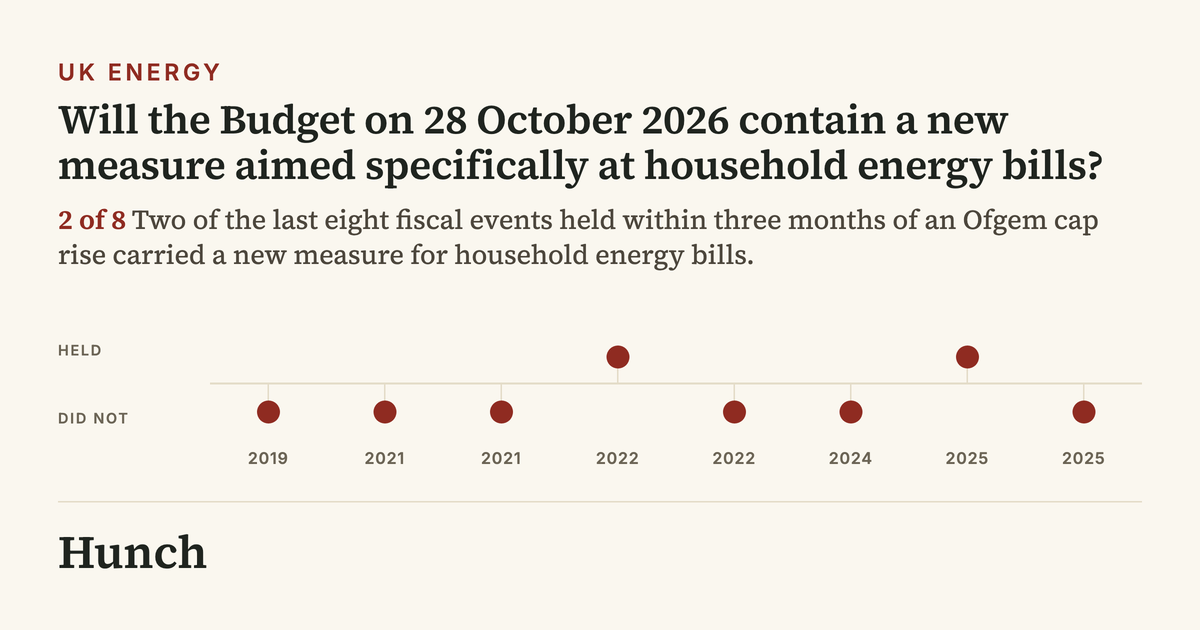
We looked at every UK Budget, and every Spring or Autumn Statement, since the cap began in 2019 that came within three months after Ofgem announced a rise. We found eight. For each we asked one question: did it bring a new step that cuts household energy bills or helps pay them? Spending on energy efficiency, higher benefits and the Household Support Fund do not count, and nor does help announced outside these statements.
Show the other 6 cases
The Read
History leans against new help. Six of the eight Budgets and Statements after a cap rise did nothing new on bills, and a 4 per cent rise is small next to the cases that brought action. Our market still opens above evens, because this government has done something none of those six did. It has already passed a VAT cut that starts in the same month as the cap rise. On it also said in writing that any further action would come at the Budget. A Chancellor who has named the place for a decision is more likely to use it than one who was never asked.
There are good reasons for doubt. The cap is still 52 per cent below its 2022 peak, 11 million households on fixed deals will not feel the rise, and the Chancellor has built his first Budget around discipline and the fiscal rules. The two statements that acted came when the cap was £3,549, or when the Treasury had levy costs it could move off bills. The two most like today, and , did nothing.
The Budget speech settles it. If the Chancellor points to the October VAT cut as his answer, the Budget will most likely pass without a new line on energy bills, like the six before it.
Disclaimer
Hunch works only from sources that are publicly available, and publishes on the basis of analysis of that material. We do not form an editorial opinion or take sides, we give a simpler and wider view of news that already exists. If information in a source we used was inaccurate, distorted, or later disputed but had already entered our analysis, Hunch accepts no liability for that. Predictions are not advice. Phase 1 markets use Hunch Points, not money.
Published by Hunch under the Editorial Code. Complaints and corrections: /contact/.