Meta agrees $18bn US teen deal. Australia's ban has not kept most young teens off.
Meta settled with 47 US states and 4 territories and agreed a 2-hour daily limit for under-18s. It pays the last $5bn only if rival apps do the same.
What happened
Meta agreed a settlement worth up to $16.68bn over ten years plus $10bn in legal fees, suspending a trial in Oakland that began on , with the judge indicating she is inclined to approve it.
Meta settled on , eight days into a trial at the federal court in Oakland that was expected to last six weeks. The deal is worth $18bn over ten years. Of that, $16.7bn goes to 47 states, Washington DC, Puerto Rico, American Samoa and the Northern Mariana Islands, and more than $1bn goes to Texas separately. California gets $2.2bn and New York $1.1bn.
Part of the money depends on Meta’s rivals. Meta pays 70%, about $12.7bn, in any case. The other $5bn is due only if Snapchat, TikTok and YouTube take similar steps. If they do, Meta will also cut its own daily limit from two hours to one.
For under-18s the changes include a two-hour daily limit, no use from midnight to 6am, no notifications during school hours, hidden like counts, a feed option not based on personal data, and removal of accounts held by children under 13.
Nothing starts until the court approves the deal. After that, the feed not based on personal data must be offered within four months, most other changes within six, and age checks within a year. Parents who lost children have questioned the deal.
Britain has announced a social media ban for under-16s, to start next year. It is also weighing overnight curfews and limits on endless scrolling for under-18s.
Sources: Al Jazeera (2, 3)
The Pattern
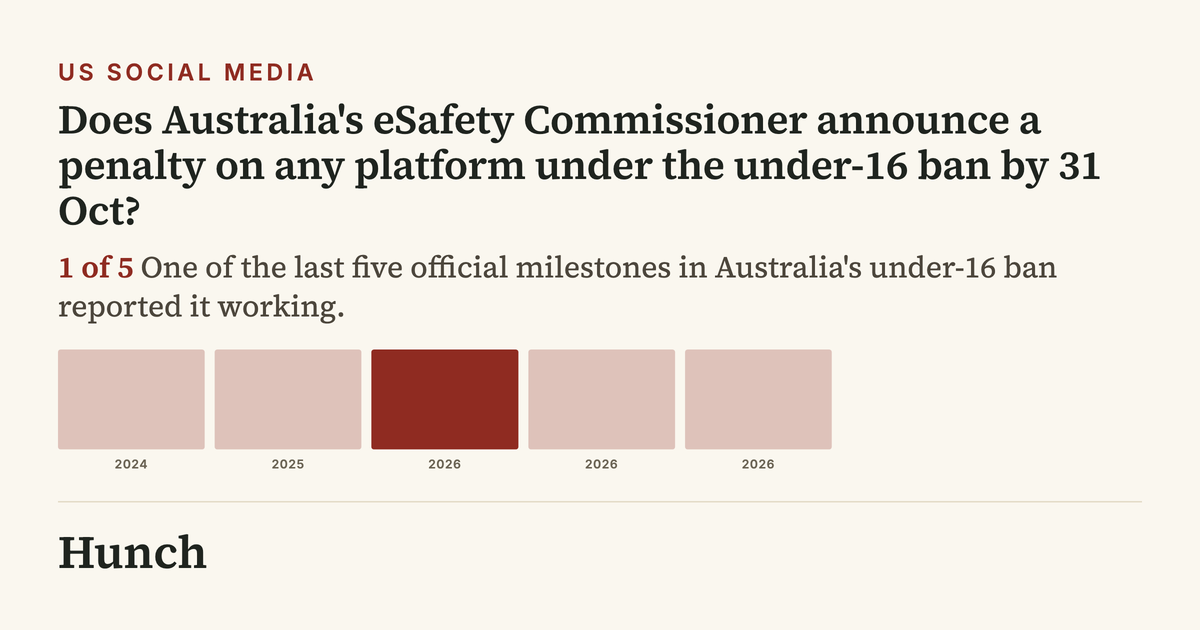
Australia’s social media ban for under-16s began in . The ban covers the same platforms and carries fines, so it is the closest real test of rules like these. We looked at the five official milestones of the ban so far. Only one of them reported the ban doing what it was meant to do.
Show the other 3 cases
The Read
The likely path is that the court approves the deal and the rivals do not follow. Judges usually approve negotiated state settlements of this size, and this judge has said she is inclined to. With 47 states and four territories signed up, there is little room left to object.
The $5bn that depends on the rivals shows what Meta itself expects. A two-hour daily limit cuts the time teens spend on an app, and TikTok, Snap and YouTube face no trial that would force one on them. Meta would rather pay nothing extra and keep its own limit at two hours. Australia’s record is a reason to expect little from such rules: 4.7 million accounts closed and fines doubled, and still eight in ten young teens and preteens on the apps.
The rivals could still be pushed by law. Britain plans an under-16 ban next year and is considering curfews and scroll limits, and the European Commission has told Meta that extending the protections to EU users is now up to Meta. If regulators impose what Meta has agreed, the rivals would have to adopt time limits and the $5bn would fall due anyway.
Disclaimer
Hunch works only from sources that are publicly available, and publishes on the basis of analysis of that material. We do not form an editorial opinion or take sides, we give a simpler and wider view of news that already exists. If information in a source we used was inaccurate, distorted, or later disputed but had already entered our analysis, Hunch accepts no liability for that. Predictions are not advice. Phase 1 markets use Hunch Points, not money.
Published by Hunch under the Editorial Code. Complaints and corrections: /contact/.