Tesla's best second quarter: 480,126 cars. Recent records mostly saw shares fall.
Tesla delivered 480,126 vehicles, its best second quarter ever and about 74,000 more than Wall Street expected. The shares still fell over 7 per cent.
What happened
Tesla reported 480,126 deliveries for the second quarter of 2026, up 25 per cent year on year and around 74,000 vehicles above consensus, its strongest second quarter on record. The company also deployed 13.5 GWh of energy storage, up more than 40 per cent from a year earlier.
After two years of falling sales, this looked like the turnaround Tesla had promised. Deliveries beat the roughly 406,000 that analysts expected and passed the old second-quarter record of 466,140, set in 2023. Tesla built 451,758 vehicles in the quarter, so close to 28,000 of the cars it delivered came from stock built earlier in the year.
The recovery was led by Europe, where registrations roughly doubled on a year earlier. High fuel prices and government incentives helped, as did more companies moving their fleets to electric cars. Last year’s anger among buyers at Elon Musk’s politics also faded. North America stayed weak. The $7,500 federal tax credit for buyers ended at the end of , and US demand has not fully recovered from the rush to buy before that date.
The earnings report in late July will show what the record cost. The shares fell anyway on the day of the record. Investors turned at once to how it was won: how much came from discounts and from selling old stock, and what that did to profit margins, the share of each sale that Tesla keeps.
Sources: Tesla IR
The Pattern
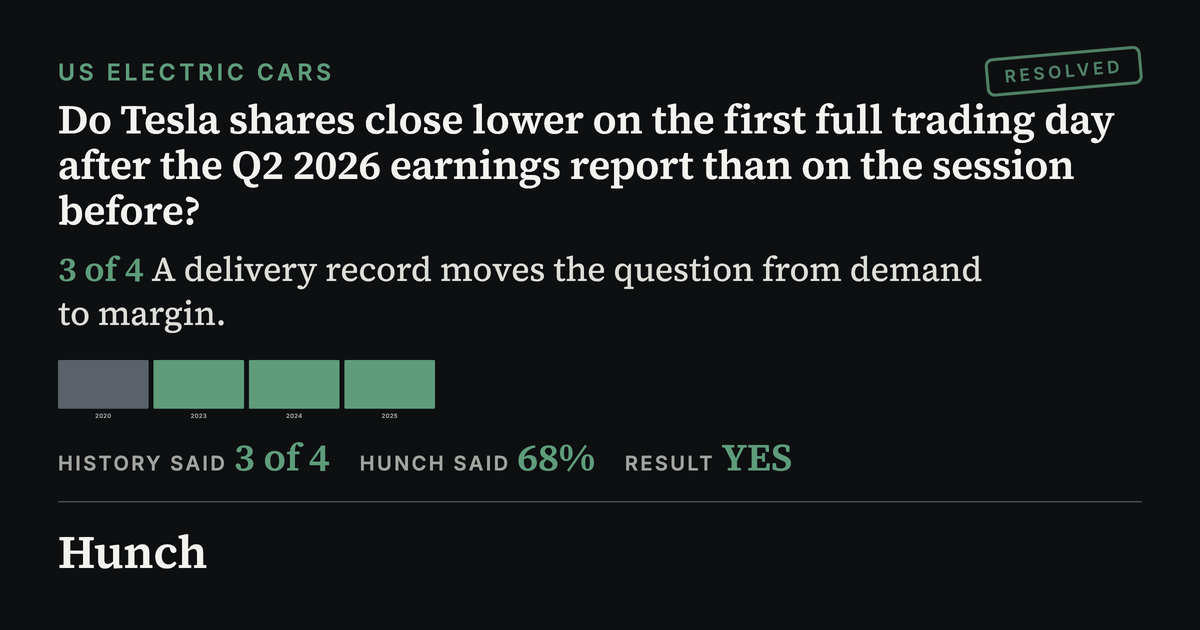
We looked at every Tesla delivery record since 2020. For each one we checked whether the shares were lower a month after the record was announced. The record itself was always real. Most times, though, the earnings report about three weeks later showed what it had cost.
Show the other 2 cases
The Read
History leans towards a fall. Three of the last four Tesla delivery records were followed within a month by lower shares, because the earnings report showed what the extra sales had cost in discounts and thinner margins. This quarter shows the same signs. Tesla delivered 28,000 more cars than it built, Europe’s rise leaned on incentives and fuel prices, and US buyers no longer get a federal tax credit. The fall on delivery day suggests investors have already made this call.
The case against is 2020, and it is a serious one. When a record comes from real demand and not from price cuts, a good earnings report lifts the shares. Two facts point that way now. Energy storage grew more than 40 per cent on a year earlier, and it is a high-margin business that can make up for discounts on cars. European registrations roughly doubled, against a weak year, but the recovery there was real.
The shareholder update will decide it. If it shows gross margin on cars, the share of each sale left after the cost of making it, flat or better than in the first quarter, the 7 per cent drop on delivery day will look like investors selling on the wrong news.
Disclaimer
Hunch works only from sources that are publicly available, and publishes on the basis of analysis of that material. We do not form an editorial opinion or take sides, we give a simpler and wider view of news that already exists. If information in a source we used was inaccurate, distorted, or later disputed but had already entered our analysis, Hunch accepts no liability for that. Predictions are not advice. Phase 1 markets use Hunch Points, not money.
Published by Hunch under the Editorial Code. Complaints and corrections: /contact/.